


Solo travel is one of the most rewarding ways to explore the world. It offers freedom, independence, and the chance to discover new places at your own pace. However, traveling alone also comes with its own set of challenges, particularly when it comes to staying safe. Whether you’re exploring the beautiful landscapes of Pakistan or wandering around the streets of a foreign country, staying safe should always be your top priority.
- 1. Plan Ahead and Stay Prepared
- 2. Share Your Itinerary with Someone You Trust
- 3. Stay Connected with Technology
- 4. Keep Your Belongings Secure
- 5. Choose Safe Accommodations
- 6. Trust Your Instincts
- 7. Stay Aware of Local Customs and Culture
- 8. Keep Emergency Numbers Handy
- 9. Avoid Traveling at Night
- FAQs About Solo Travel Safety
- 1. How can I make solo travel safer?
- 2. What should I do if I feel unsafe while traveling alone?
- 3. Are hostels safe for solo travelers?
- Conclusion
In this comprehensive guide, we’ll share essential solo travel safety tips that will help you minimize risks and ensure a smooth, enjoyable journey. From preparing before your trip to staying safe on the road, these tips will give you peace of mind and help you navigate solo travel with confidence.
1. Plan Ahead and Stay Prepared
Why Pre-Planning Is Crucial
The key to a successful and safe solo adventure starts with proper planning. While spontaneity is part of the joy of solo travel, having a plan ensures you know what to expect and can avoid risky situations. Proper preparation allows you to anticipate potential challenges and take necessary precautions.
Steps to Prepare Before Your Trip:
- Research your destination: Familiarize yourself with the culture, local customs, laws, and common safety concerns. For instance, in Pakistan, different cities have unique safety protocols, and knowing local etiquette can prevent uncomfortable situations.
- Check travel advisories: Websites like the Ministry of Foreign Affairs Pakistan or Tripwizard.pk often provide updated travel advisories about safety, including information on areas to avoid due to political instability, natural disasters, or other concerns.
- Stay organized: Keep important documents like your passport, emergency contacts, flight tickets, and accommodation details in a safe and easily accessible place. Having both physical and digital copies of these documents ensures you won’t be caught off guard if something is lost or stolen.
2. Share Your Itinerary with Someone You Trust
Why Sharing Your Plans is Important
It’s essential to keep someone close to you informed about your travel itinerary. This can be a family member, close friend, or even a trusted colleague. While solo travel is all about freedom, it’s still important to have someone who knows your whereabouts, especially in case of an emergency.
How to Share Effectively:
- Give them your itinerary: Share details about where you’ll be staying, your flight details, and your planned activities. Regularly update them on your whereabouts, especially if your plans change.
- Use location-sharing apps: Apps like Google Maps or Find My Friends allow you to share your real-time location with trusted contacts. This ensures someone can quickly track you if necessary.
3. Stay Connected with Technology
Use Technology to Your Advantage
In today’s digital age, technology can be a valuable tool for ensuring your safety. There are several apps and platforms that can help you stay connected, navigate your way, and even alert others if you’re in danger.
Helpful Apps for Solo Travelers:
- Tripwizard.pk: Use our platform to find and book flights, hotels, and activities tailored to your needs. You can also access travel tips and safety guides specific to your destination in Pakistan.
- Google Maps: A lifesaver for navigating unfamiliar areas. You can download offline maps to avoid data roaming charges.
- Emergency apps: Apps like bSafe or SOS Alert can send an emergency message or location alert to your emergency contacts with just a tap.
- Translator apps: If you’re traveling abroad, apps like Google Translate or Duolingo can help break down language barriers, especially in places where you don’t speak the local language.
4. Keep Your Belongings Secure
The Importance of Security While Traveling Alone
When you’re traveling solo, the risk of theft or loss is higher, particularly in crowded areas or tourist hotspots. It’s crucial to take proactive measures to safeguard your valuables and belongings.
Tips for Securing Your Belongings:
- Use anti-theft bags: Invest in bags designed to prevent theft. Backpacks with lockable zippers or hidden compartments are ideal for keeping your belongings safe.
- Be mindful of pickpockets: In crowded places, keep your wallet, phone, and passport in secure places like a neck pouch or money belt. Avoid displaying valuable items like expensive jewelry or cameras in busy areas.
- Avoid over-packing: Keep your load light and avoid carrying unnecessary valuables that could be stolen or lost. Focus on taking only essential items.
5. Choose Safe Accommodations
How to Select Safe Lodging
Your accommodation can play a significant role in your overall safety. Choosing the right place to stay ensures you’re in a safe area and have easy access to local amenities, transport, and emergency services.
What to Look for in Safe Accommodations:
- Check reviews: Read online reviews on platforms like Tripadvisor or zameeninfo to see what previous travelers have said about the property. Look for reviews that mention safety, cleanliness, and the area’s overall security.
- Location matters: When booking your accommodation, choose a location that’s close to public transportation, hospitals, or police stations. Avoid areas that are known for higher crime rates or are far from local attractions.
- Hostels vs. Hotels: If you’re staying in hostels, choose those that are well-rated, and ensure they have lockers for storing valuables. Many hostels offer security features such as surveillance cameras and 24-hour reception.
6. Trust Your Instincts
Why Gut Feelings Matter
Your intuition is a powerful tool when it comes to safety. If something doesn’t feel right or a situation seems suspicious, it’s important to trust your instincts and remove yourself from it immediately.
How to Stay Safe Using Intuition:
- Avoid risky situations: If you’re unsure about an area or a person, it’s better to err on the side of caution and leave.
- Stay alert: Pay attention to your surroundings. If you feel uncomfortable or sense danger, trust your gut and find a safer place.
7. Stay Aware of Local Customs and Culture
Understanding Local Norms for Better Safety
Every country and city has its own set of cultural norms, and understanding these can help you avoid unwanted attention or dangerous situations. In Pakistan, for example, it’s important to dress modestly, especially in more conservative areas.
How to Be Culturally Sensitive:
- Research local customs: Whether you’re traveling in Pakistan or abroad, it’s crucial to understand the basic customs and etiquette. This includes how to greet people, appropriate dress codes, and how to behave in public spaces.
- Be respectful of traditions: Showing respect for the local culture not only keeps you safe but also helps foster positive interactions with locals. In many parts of Pakistan, for instance, public behavior should be conservative, particularly in religious or rural areas.
8. Keep Emergency Numbers Handy
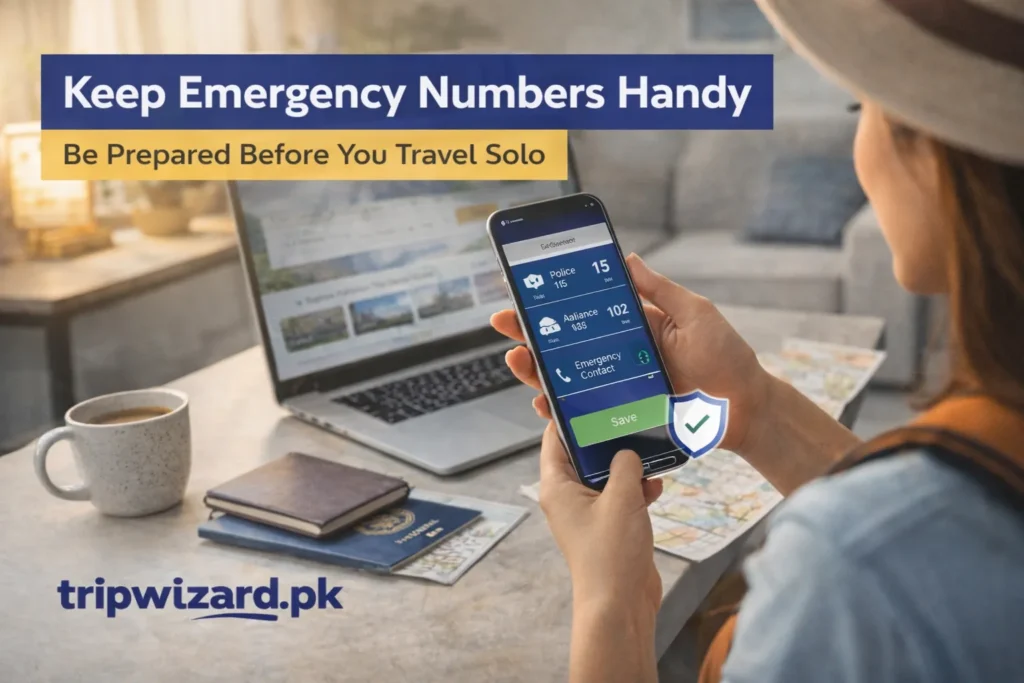
Know Who to Call in Case of Emergency
It’s vital to have a list of emergency contacts and local numbers in case something goes wrong. Familiarize yourself with the emergency services in the area you’re traveling to.
Key Emergency Contacts:
- Police: In Pakistan, the emergency number for the police is 15.
- Ambulance: Dial 102 for medical emergencies.
- Tripwizard.pk Support: Our team can assist you with travel-related emergencies, including booking changes and trip adjustments.
9. Avoid Traveling at Night
Why Daylight Travel is Safer
Traveling during the day gives you the advantage of better visibility and the ability to reach your accommodation or destination quickly. It’s generally safer to explore new areas during daylight hours rather than at night, particularly if you’re unfamiliar with the area.
Tips for Safe Night Travel:
- If you must travel at night, choose well-lit, populated areas and use a reliable mode of transportation such as taxis or rideshare services.
- Stay in well-populated areas: Avoid isolated areas after dark, especially if you’re unfamiliar with the area.
FAQs About Solo Travel Safety
1. How can I make solo travel safer?
The key to safe solo travel is preparation. Share your itinerary with a trusted person, stay connected using technology, and always trust your instincts. Additionally, keep your belongings secure, choose accommodations carefully, and research the local culture and customs.
2. What should I do if I feel unsafe while traveling alone?
If you feel unsafe, trust your instincts and leave the area. Head to a safe, populated place such as a café, hotel, or police station. Contact someone you trust and let them know your location.
3. Are hostels safe for solo travelers?
Hostels can be safe if you choose well-rated ones with security features like lockers and 24-hour reception. Make sure to read reviews and pick a location in a safe area of town.
Conclusion
Solo travel is an empowering experience, but it’s essential to prioritize your safety while exploring new places. By following these solo travel safety tips, you can minimize risks and ensure a smooth and enjoyable journey. With the right preparation, mindset, and awareness, you’ll be ready to embark on your next adventure with confidence and peace of mind.
Ready to Plan Your Solo Adventure?
Visit Tripwizard.pk today to find the best flight and accommodation deals, and start planning your safe and exciting solo journey!