


Airline Pricing Work often feel mysterious one minute a flight looks affordable, the next it’s skyrocketed. The same seat on the same flight can cost vastly different amounts depending on when and how you search. This isn’t random; it’s the result of sophisticated revenue management systems airlines use to maximize every flight’s profitability.
In 2026, airline pricing relies heavily on dynamic pricing powered by AI, machine learning, and real-time data. Airlines adjust fares constantly based on demand, competition, booking patterns, and more. Understanding this helps you spot deals and avoid overpaying whether flying domestically in Pakistan or internationally.
This detailed guide explains the mechanics behind airline pricing, key factors, common strategies, and practical advice for travelers. For the latest fares on routes like Karachi to Dubai, Lahore to Islamabad, or international hops, head to TripWizard.pk to compare airlines side-by-side and book securely.
Airline Pricing Basics: Revenue Management Explained
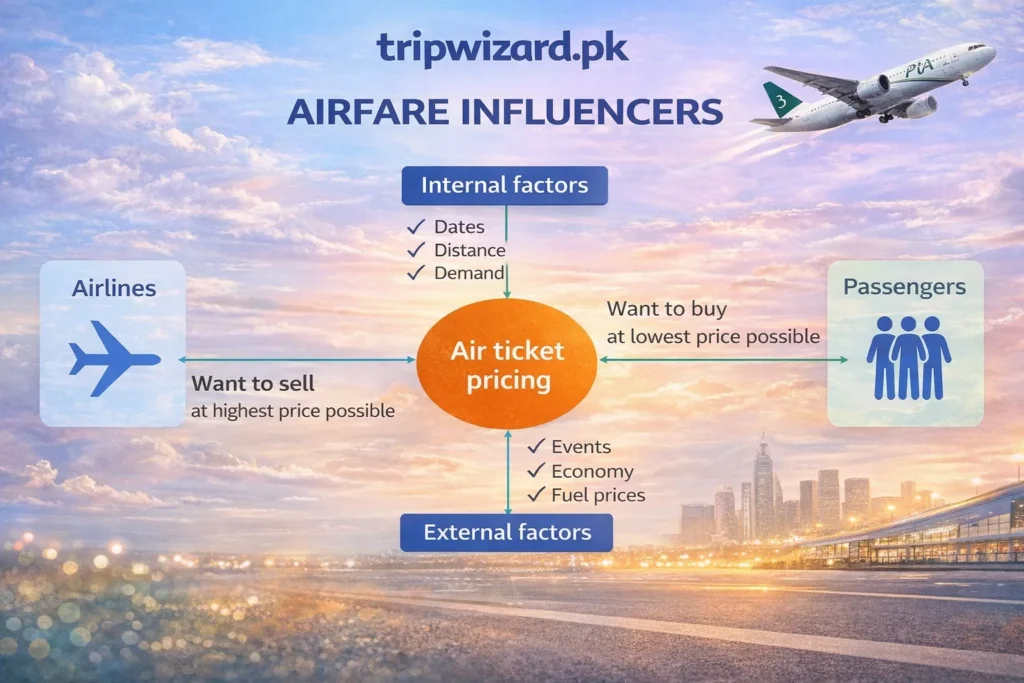
Airlines sell the same seat multiple times at different prices through revenue management (also called yield management). The goal: fill planes while capturing the highest possible revenue. They use algorithms to forecast demand and set prices accordingly.
Key concept: An empty seat generates zero revenue once the flight departs. Airlines prefer selling at lower prices early to fill seats rather than leaving them empty. But they also hold some seats for last-minute high-paying customers (business travelers).
This creates price discrimination: different people pay different amounts for the identical product based on willingness to pay, flexibility, and timing.
How Dynamic Pricing Works in 2026
Dynamic pricing adjusts fares in real time using AI and big data. Airlines no longer rely on fixed filed fares; systems scan millions of data points instantly.
Core elements:
- Demand signals: Searches, bookings, and load factors (how full the flight is).
- Competition monitoring: What rivals charge for similar routes.
- Booking curves: Historical patterns show when demand peaks (e.g., mid-week business vs. weekend leisure).
- External factors: Fuel costs, holidays, events, weather, currency fluctuations.
- Customer behavior: Price sensitivity some segments (leisure) drop off if prices rise; others (business) book anyway.
AI models predict if raising prices now loses future sales or if holding low prices fills the plane faster. In 2026, AI handles complex scenarios like sudden demand spikes from events or competitor changes.
Fare Classes and Buckets
Airlines divide inventory into fare classes (e.g., Y, M, Q for economy). Each has rules (refundable? baggage? changes?) and availability limits.
- Protected seats: Held for high-fare buyers (last-minute).
- Unprotected seats: Sold early at discounts.
As seats sell in lower buckets, higher-priced ones open. This is why prices rise as departure nears if demand holds.
Factors That Influence Airline Ticket Prices
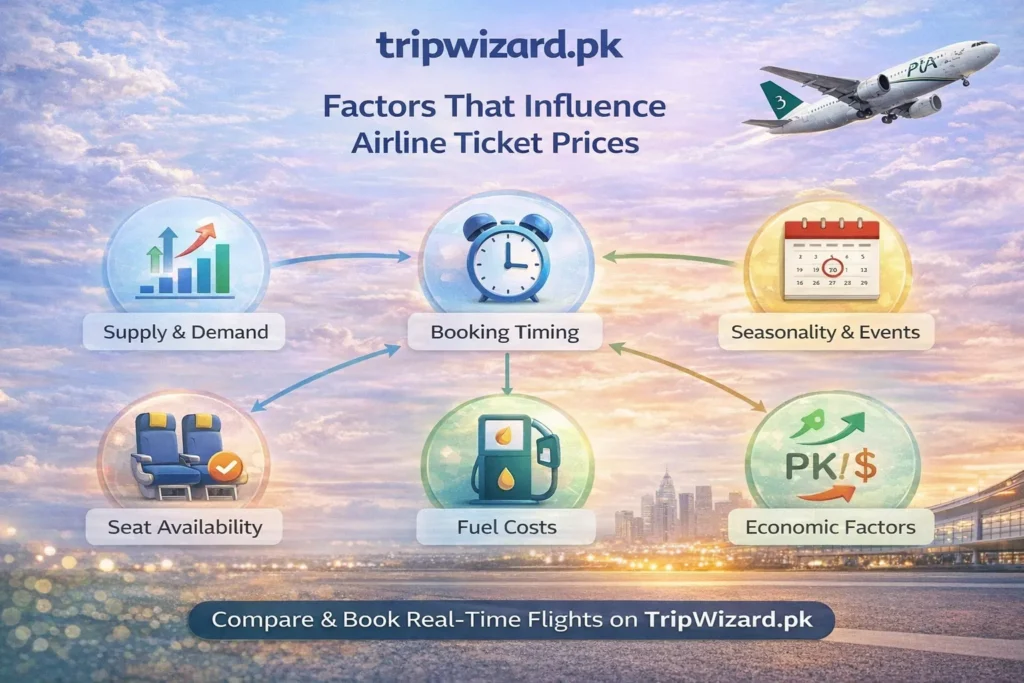
Multiple variables drive the final price you see.
1. Supply and Demand
Basic economics: High demand + limited seats = higher prices. Peak seasons (Eid, summer holidays in Pakistan) or popular routes (Karachi–Dubai) surge.
2. Booking Timing and Advance Purchase
Book too early (6–11 months out): Airlines set baseline prices.
Best windows: Domestic Pakistan routes: 2–4 weeks ahead. International: 1–3 months (short-haul Middle East) or 2–6 months (long-haul).
Last-minute: Often expensive due to remaining high-fare seats.
3. Day of Week and Time of Day
Cheapest days: Tuesday, Wednesday, Thursday.
Expensive: Fridays, Sundays, holidays.
Red-eye or off-peak times cheaper.
4. Seasonality and Events
Shoulder seasons (post-Eid, early winter) offer deals. Major events (sports, festivals) spike prices.
5. Route Popularity and Competition
Busy corridors (Lahore–Islamabad) competitive lower base fares. Remote areas (Gilgit) higher due to limited options.
6. Ancillaries and Bundles
Base fare low, but add-ons (baggage, seats, meals) boost revenue. Dynamic pricing extends to ancillaries.
7. Fuel Costs, Currency, and Macro Factors
Fuel price rises pass through. PKR fluctuations affect international fares.
Airline Pricing Strategies in 2026
- Dynamic Pricing: Real-time adjustments (dominant strategy).
- Yield Management: Optimize per-seat revenue.
- Value-Based Pricing: Charge based on perceived value (premium for direct flights).
- Penetration Pricing: Low intro fares for new routes.
- Basic Economy: Stripped-down fares to compete with low-cost carriers.
Low-cost airlines (Fly Jinnah) use aggressive dynamic models; full-service (PIA) balance inclusions with higher bases.
Why Prices Change So Often (and What You See)
Prices fluctuate hourly because algorithms react to new data. Your search might trigger a price hike if many people query the same flight perceived higher demand.
Incognito mode or clearing cookies sometimes helps avoid personalized hikes (though less effective now).
Tips to Get Better Deals on Airline Tickets
- Book in optimal windows: 2–4 weeks domestic, 1–3 months international.
- Fly mid-week, avoid peaks.
- Use alerts: Set price drops on TripWizard.pk.
- Compare multiple airlines and dates.
- Be flexible: Shift by 1–2 days.
- Book round-trip: Often cheaper.
- Watch promotions: Airlines run flash sales.
For Pakistan routes, mid-week bookings and shoulder seasons yield savings.
Common Myths About Airline Pricing
- Myth: Prices always rise if you search repeatedly. (Mostly demand-driven, not tracking.)
- Myth: Last-minute deals are common. (Rare in 2026 premium seats dominate late.)
- Myth: Airlines lose money on cheap tickets. (They fill planes profitably.)
FAQs: How Does Airline Pricing Work?
Why do flight prices change so much?
Dynamic pricing algorithms adjust based on real-time demand, competition, and data.
What’s the best time to book flights in Pakistan?
Domestic: 2–4 weeks ahead; international: 1–3 months (short-haul) or longer.
Do airlines use AI for pricing?
Yes, AI processes vast data for precise, real-time adjustments in 2026.
How can I avoid high prices?
Be flexible with dates, book mid-week, use comparison tools like TripWizard.pk.
Why are last-minute flights expensive?
Remaining seats often high-fare buckets for flexible/business travelers.
Does incognito mode help find cheaper fares?
Sometimes prevents some personalization, but demand is the main driver.
Ready to Find the Best Flight Deals?
Now that you understand airline pricing, use it to your advantage. Dynamic systems aim to maximize revenue, but smart timing and tools help you pay less.
For real-time comparisons, price alerts, and easy bookings on Pakistan domestic/international routes, visit TripWizard.pk today. Input your cities, filter options, and secure the best available fare. Happy (and affordable) travels!

I found the explanation of dynamic pricing fascinating! It’s interesting how airlines adjust prices based on booking patterns and demand. I’m curious, though—do these AI systems consider social media trends or is it more about historical booking data?