
Planning Hajj is one of the most meaningful decisions you’ll ever make. It’s a journey of faith, patience, and renewal but it also requires careful preparation. From understanding the rituals to handling logistics like visas and packing, every detail matters so you can focus on worship rather than worry.
- What is Hajj and Why is it Important?
- Hajj 2026 Dates and Schedule
- Who is Eligible for Hajj?
- Hajj Visa and Registration Process (2026)
- Flights and Travel to Saudi Arabia for Hajj (Add Image)
- Typical Hajj Costs and Budgeting
- Physical and Spiritual Preparation
- Packing List for Hajj
- Step-by-Step Hajj Rituals with Arabic Duas
- 1. Entering Ihram (at Miqat)
- 2. Arrival in Makkah – Tawaf al-Qudum
- 3. Sa’i Between Safa and Marwah
- 4. Day of Arafah (9th Dhul-Hijjah)
- 5. Muzdalifah Night
- 6. Eid al-Adha & Stoning Jamarat (10th–12th/13th)
- 7. Farewell Tawaf (Tawaf al-Wida)
- Health and Safety Tips During Hajj
- Packing List for Hajj (Men & Women)
- Common Mistakes and How to Avoid Them
- Hajj Packages from Pakistan
- Frequently Asked Questions Hajj Travel Information 2026
This in-depth Hajj travel information guide is written like a trusted friend walking you through everything for 2026. We’ll cover eligibility, dates, visas (especially for Pakistanis), flights, costs, step-by-step rituals with all major Arabic Duas (plus transliteration and translation), health tips, packing essentials, common mistakes, and more. Whether you’re going from Pakistan, the UK, US, or elsewhere, this will help you prepare spiritually and practically.
Hajj is expected in early June 2026 (Dhul-Hijjah 8–13, approximate dates subject to moon sighting). Start now places fill fast, and preparation takes time.
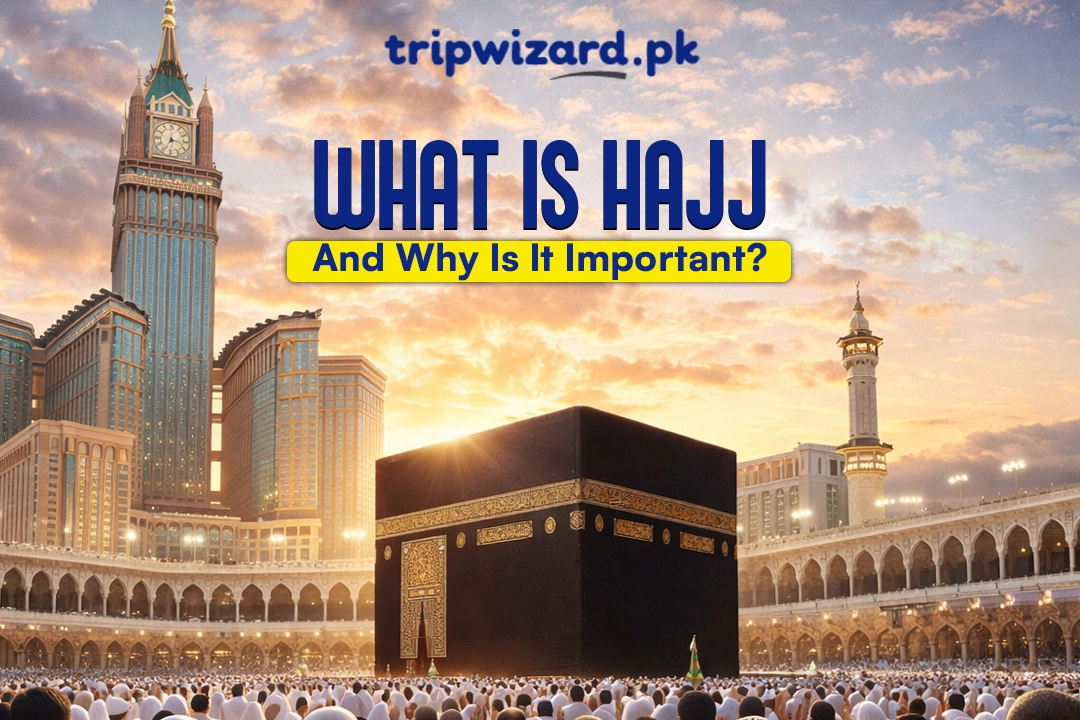
What is Hajj and Why is it Important?

Hajj is the fifth pillar of Islam a once-in-a-lifetime obligation for every Muslim who is physically, financially, and safely able to perform it. It brings millions together in equality before Allah, wearing simple white garments, standing in prayer, and seeking forgiveness.
The Prophet Muhammad (PBUH) said: “Whoever performs Hajj for Allah’s sake only and does not have sexual relations with his wife, and does not do evil or sins then he returns from Hajj free from all sins as if he were born anew” (Sahih al-Bukhari).
For many, Hajj is the highlight of their faith journey – a chance to reset, repent, and grow closer to Allah.
Types of Hajj
There are three main ways to perform Hajj:
- Hajj al-Tamattu’ (most common): Perform Umrah first, exit Ihram, then re-enter Ihram for Hajj.
- Hajj al-Qiran: Perform Umrah and Hajj together with one Ihram.
- Hajj al-Ifrad: Perform Hajj only, without Umrah.
Most pilgrims from Pakistan do Tamattu’.
Hajj 2026 Dates and Schedule
Hajj follows the Islamic lunar calendar, so dates shift earlier each year on the Gregorian calendar. Exact dates depend on moon sighting in Saudi Arabia.
Expected 2026 timeline (approximate – confirm closer to time):
- Dhul-Hijjah 1: Late May 2026
- 8th Dhul-Hijjah (Day of Tarwiyah): Around June 4
- 9th Dhul-Hijjah (Day of Arafah): Around June 5
- 10th Dhul-Hijjah (Eid al-Adha): Around June 6
- Hajj ends: Around June 9–10
Pilgrims usually arrive in Makkah a few days before the 8th for preparation and Umrah (in Tamattu’).
Who is Eligible for Hajj?
Hajj is obligatory only if you meet these conditions:
- Muslim
- Adult (reached puberty)
- Sane and mentally capable
- Physically able (can endure travel and rituals)
- Financially able (can cover costs without debt or hardship to family)
- Safe passage (no war/danger)
For women: Saudi rules now allow women without Mahram in groups, but many countries (including Pakistan) prefer or require Mahram for safety/logistics.
If you’ve performed Hajj before, it’s not obligatory again – but many do it multiple times as Sunnah.
Hajj Visa and Registration Process (2026)
Hajj visas are separate from tourist/Umrah visas you must apply through official channels.
For Pakistanis
Pakistan’s Ministry of Religious Affairs (MOHR) handles Hajj quota (around 179,000 seats in recent years). Applications open via MOHR portal or banks – often with a lottery system for government scheme.
Steps:
- Register online or at designated banks
- Submit documents (passport, CNIC, photos, medical certificate)
- Pay dues in installments
- Attend training sessions
Private operators (approved by MOHR) offer packages with easier booking – no lottery.
Passport must be valid 6+ months beyond Hajj dates.
Vaccinations: Meningitis, polio (for Pakistanis), flu, COVID (check latest).
Global Applicants
Use Nusuk Hajj portal (official Saudi platform) – register, choose package from approved operators, pay, get visa.
Requirements: Passport valid 6+ months, vaccinations, proof of Mahram (if applicable).
Apply early quotas fill fast.
Official site: haj.gov.sa or nusuk.sa.
Flights and Travel to Saudi Arabia for Hajj (Add Image)
From Pakistan: Direct flights from Karachi, Lahore, Islamabad to Jeddah (JED) 4–6 hours. Airlines like PIA, Saudia, and others run special Hajj flights.
Global: Major hubs to Jeddah or Madinah.
Packages often include flights, group travel, and airport transfers.
Tip: Arrive early for Umrah (Tamattu’) – spend time in Madinah first.
Typical Hajj Costs and Budgeting
Costs vary by package type, accommodation, and country.
Common inclusions: Visa, flights, hotels in Makkah/Madinah, Mina/Arafat camps, meals, transport, guidance.
From Pakistan: Government schemes are more affordable; private packages offer luxury options.
Global: $5,000–$15,000+ USD depending on comfort.
Save by: Choosing shared rooms, group packages, budgeting for extras (souvenirs, Zamzam transport).
Physical and Spiritual Preparation
Physical Prep
- Walk daily (build stamina for 10–20 km)
- Get fit – Hajj involves standing, walking in heat
- Medical checkup – manage chronic conditions
- Vaccinations – mandatory ones save time
Spiritual Prep
- Learn rituals (join classes)
- Memorize Duas
- Increase worship (Quran, Salah, Istighfar)
- Settle debts, ask forgiveness from others
Make a will Hajj is a reminder of death.
Packing List for Hajj
Pack light you’ll walk a lot.
Essentials:
- Ihram (2–3 sets for men; modest clothes for women)
- Comfortable sandals (no heels)
- Unscented soap/shampoo (no perfume in Ihram)
- Prayer mat, small Quran or app
- Medications (personal + painkillers, anti-diarrhea)
- Sunscreen, hat, umbrella
- Reusable water bottle
- Power bank, universal adapter
- Small backpack/day bag
- Face masks, hand sanitizer
Women: Abayas, scarves, socks.
Men: Simple clothes post-Ihram.
Avoid: Valuables, scented items in Ihram, large luggage.
Step-by-Step Hajj Rituals with Arabic Duas

Hajj has three types – most do Tamattu’ (Umrah first, then Hajj).
1. Entering Ihram (at Miqat)
Make ghusl, wear Ihram clothes, pray 2 rak’ahs.
Niyyah (Intention):
Arabic: اللَّهُمَّ إِنِّي أُرِيدُ الْحَجَّ فَيَسِّرْهُ لِي وَتَقَبَّلْهُ مِنِّي
Transliteration: Allahumma inni uridu al-Hajja fa yassirhu li wa taqabbalhu minni
Translation: O Allah, I intend to perform Hajj, so make it easy for me and accept it from me.
Talbiyah (Recite often):
Arabic: لَبَّيْكَ اللَّهُمَّ لَبَّيْكَ، لَبَّيْكَ لَا شَرِيكَ لَكَ لَبَّيْكَ، إِنَّ الْحَمْدَ وَالنِّعْمَةَ لَكَ وَالْمُلْكَ لَا شَرِيكَ لَكَ
Transliteration: Labbayk Allahumma labbayk, labbayk la sharika laka labbayk, innal hamda wan ni’mata laka wal mulk, la sharika lak
Translation: Here I am, O Allah, here I am. Here I am, You have no partner, here I am. Verily all praise and blessings are Yours, and all sovereignty, You have no partner.
Prohibitions in Ihram: No perfume, no stitched clothes (men), no hunting, no marital relations, etc.
2. Arrival in Makkah – Tawaf al-Qudum
Enter Masjid al-Haram with right foot, recite dua for entering mosque.
Dua upon seeing Kaaba: Raise hands and supplicate freely (accepted time).
During Tawaf (7 circuits):
Between Yemeni Corner and Black Stone:
Arabic: رَبَّنَا آتِنَا فِي الدُّنْيَا حَسَنَةً وَفِي الْآخِرَةِ حَسَنَةً وَقِنَا عَذَابَ النَّارِ
Transliteration: Rabbana atina fid-dunya hasanatan wa fil-akhirati hasanatan wa qina ‘adhaban-nar
Translation: Our Lord, give us good in this world and good in the Hereafter, and protect us from the punishment of the Fire.
After Tawaf: Pray 2 rak’ahs behind Maqam Ibrahim.
Drink Zamzam make dua for whatever you wish.
3. Sa’i Between Safa and Marwah
7 walks (start at Safa).
At Safa (recite Quran verse and dua):
Arabic: إِنَّ الصَّفَا وَالْمَرْوَةَ مِنْ شَعَائِرِ اللَّهِ…
Then Takbir 3 times and dua: اللَّهُ أَكْبَرُ (x3), لا إله إلا الله وحده لا شريك له…
Repeat at Marwah.
4. Day of Arafah (9th Dhul-Hijjah)
Main day – stand in prayer from noon to sunset.
Key Dua (many prophets made it):
Arabic: لا إله إلا الله وحده لا شريك له، له الملك وله الحمد وهو على كل شيء قدير
Transliteration: La ilaha illallah wahdahu la sharika lah, lahul-mulk wa lahul-hamd wa huwa ‘ala kulli shay’in qadir
Translation: There is no god but Allah alone, no partner has He. To Him belongs sovereignty and praise, and He has power over everything.
Make personal Duas it’s the day of forgiveness.
5. Muzdalifah Night
Collect 49–70 pebbles for stoning.
Pray Maghrib + Isha combined.
6. Eid al-Adha & Stoning Jamarat (10th–12th/13th)
Stone largest Jamarah (Aqabah) with 7 pebbles say Allahu Akbar each time.
Sacrifice animal (Qurbani).
Shave/trim hair (men shave preferred).
Tawaf al-Ifadah (same as arrival Tawaf).
7. Farewell Tawaf (Tawaf al-Wida)
Before leaving Makkah 7 circuits.
Dua: Make heartfelt supplications.
Health and Safety Tips During Hajj
Heat (40°C+), crowds, walking prioritize health.
Tips:
- Drink Zamzam constantly
- Wear sunscreen, hat, loose clothes
- Rest in shade/AC when possible
- Use masks in crowds
- Carry meds (painkillers, anti-diarrhea, personal prescriptions)
- Follow group leader
For Pakistanis: MOHR provides medical camps.
Packing List for Hajj (Men & Women)
Men:
- 2–3 Ihram sets (unstitched white)
- Comfortable sandals
- Modest clothes post-Ihram
- Small backpack
Women:
- Abayas/scarves (loose, breathable)
- Comfortable closed shoes
- Socks for Tawaf
All:
- Unscented toiletries
- Prayer mat, small Quran/app
- Medications, first-aid
- Reusable bottle, power bank
- Passport/docs copies
Avoid perfume in Ihram.
Common Mistakes and How to Avoid Them
- Not learning rituals – attend classes
- Breaking Ihram rules (perfume, arguing)
- Overpacking – luggage limits
- Ignoring health – dehydration common
- Not budgeting extras (souvenirs, tips)
Hajj Packages from Pakistan
MOHR government scheme: Affordable, lottery-based.
Private operators: More flexible, better hotels book via trusted agents like Tripwizard.pk for smooth experience.
Frequently Asked Questions Hajj Travel Information 2026
When is Hajj 2026?
Expected early June (Dhul-Hijjah 8–13) confirm moon sighting.
How do Pakistanis apply for Hajj?
Through MOHR portal/banks lottery for government scheme, or private operators.
What is the best Hajj type for beginners?
Tamattu’ perform Umrah first, then Hajj.
Do I need a Mahram?
For women Saudi allows groups; Pakistan prefers Mahram.
What vaccinations are required?
Meningitis, polio, flu – check latest from MOHR/Saudi.
Can I perform Hajj multiple times?
Yes Sunnah after first obligatory Hajj.
What if I miss a ritual?
Some require sacrifice consult scholar/guide.
Is Hajj safe?
Yes Saudi provides medical/security; follow guidelines.
How to stay cool in heat?
Hydrate, rest midday, use umbrellas.
What Duas for Arafah?
Many focus on forgiveness, personal needs.
Ready to begin your Hajj journey? Explore trusted packages and bookings at TripWizard.pk we’re here to make your pilgrimage smooth and blessed. May Allah accept your Hajj and grant you ease!